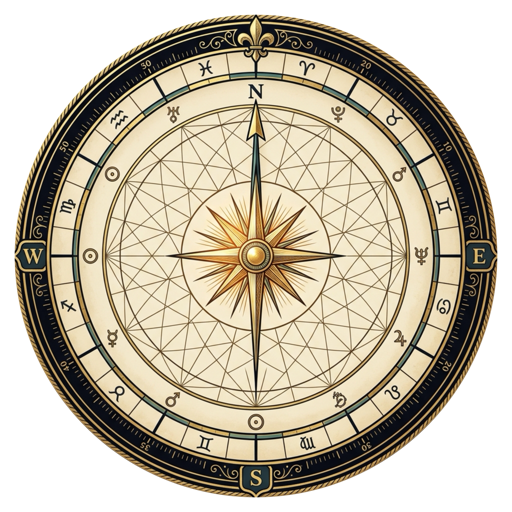
A birth chart looks like one finished wheel, but it is assembled from a few separate calculations, and each one is a place an app can go wrong. Knowing the pieces makes it easier to tell a careful app from a careless one, and to judge whether any astrology app is actually accurate.
The planets
First, where each body sits along the zodiac at your birth moment. This comes from planetary theory, the same math used to point telescopes: an established model for the Sun and planets, a dedicated series for the Moon, with precession and nutation applied so the positions land in the frame of your actual moment rather than a rounded approximation. Done right, this part is the most solid thing in the chart.
The houses and angles
Next, the Ascendant, the Midheaven, and the house cusps, computed from sidereal time for your exact moment and place. This is where birth-time trouble shows up. An unknown time means the houses cannot be trusted. A wrong timezone or a missed daylight-saving switch can throw the angles off by whole degrees, and the older the birth, the messier the timezone history. A careful engine resolves those historical timezones, daylight-saving edge cases included, instead of guessing.
The frame, and the honest limits
Finally the chart is drawn in a chosen zodiac and house system. That is a choice about tradition, not an error. The real errors are quieter. Extrapolating a slow-moving body past the range where its math holds. Serving a confident house reading for a chart that never had a reliable birth time. The honest move is to name those limits out loud rather than paper over them.
Celestium computes each of these steps on your device and stays candid about the edges. Pluto is calculated only across the years its series is valid, and house-dependent readings are flagged when a birth time is missing rather than faked. The full method, body by body, is on our Methodology and Accuracy page. Celestium is free on the App Store for iPhone, iPad, and Mac.