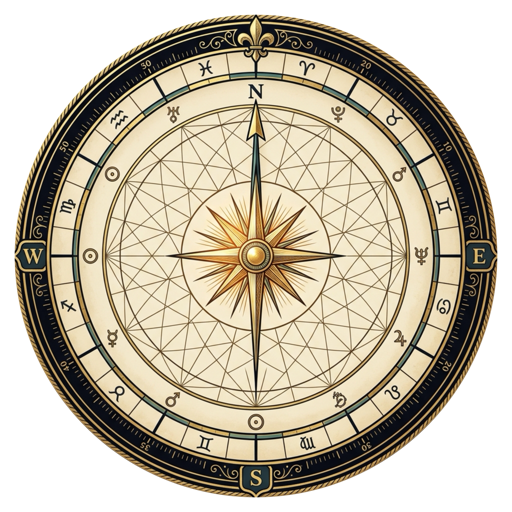
Put the same birth details into two astrology apps and you can get two different charts. Before you decide one of them is broken, it helps to know that most of the disagreement is a choice, not a bug.
House systems
The most common split is the house system. Placidus, whole sign, Koch, and Porphyry each divide the sky differently, so a planet can land in the tenth house in one and the ninth in another. None of them is the single true answer. They are different traditions for drawing the same sky. Placidus is the usual professional default, which is why most reference charts are cast in it.
The zodiac frame
The next split is tropical against sidereal. Tropical ties the signs to the seasons; sidereal, the frame of Vedic astrology, ties them to the constellations, and the two drift roughly a sign apart. A careful app does not relabel tropical text as sidereal and call it done. It writes each tradition in its own terms, because each earned its meanings honestly and reads differently.
The smaller forks, and the part that is not a choice
There are quieter forks too, like whether an app uses the true lunar node or the mean node. All of that is method, and reasonable practitioners differ. What is not a matter of taste is the astronomy underneath. Whichever system you pick, the planet has to be in the right place first. Disagreement about method is healthy. Disagreement about where Mars actually was is an error wearing a method's clothes; telling the honest choices from the real errors is the whole of what an accurate astrology app has to get right.
Celestium lets you choose your method instead of locking you into one. Placidus by default, switchable to whole sign, Porphyry, or Koch, with tropical and sidereal each written natively and the true node used throughout. Under all of it, the positions are verified against the professional reference standard, so the choice stays yours and the math stays honest. See how on our Methodology and Accuracy page. Celestium is free on the App Store for iPhone, iPad, and Mac.